National Bison Month
United States
About
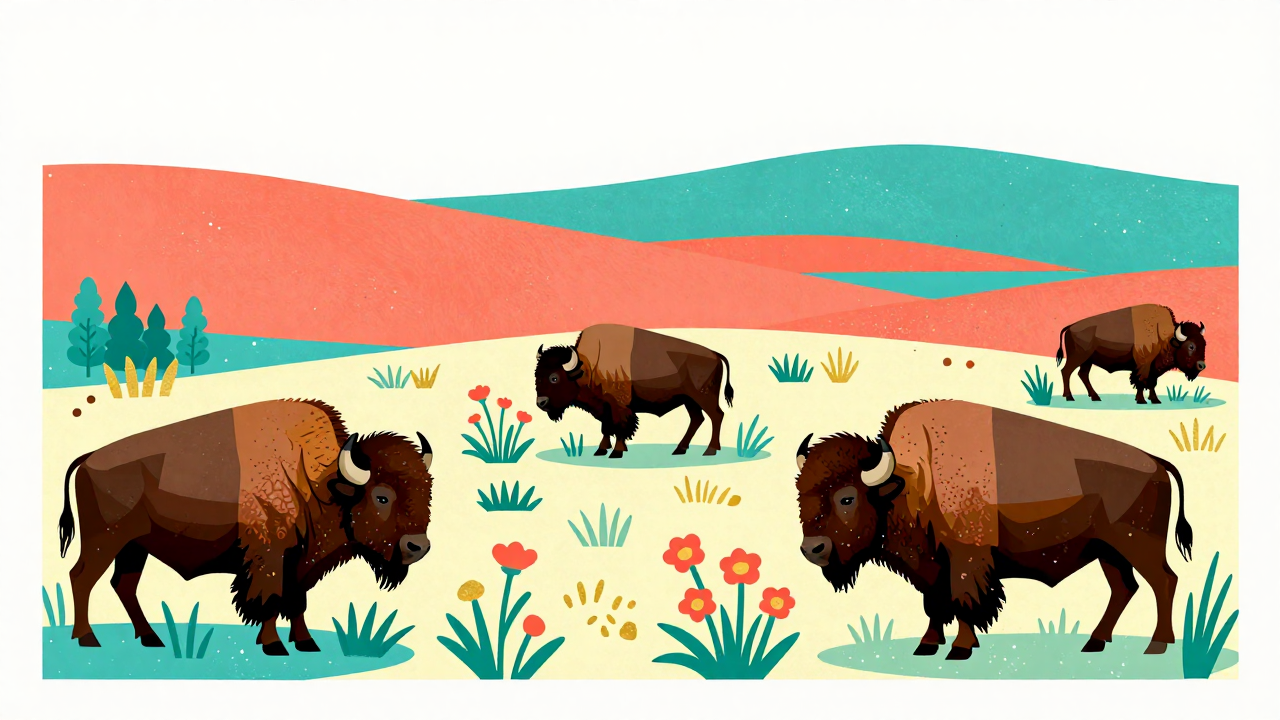
National Bison Month, observed throughout July, celebrates the American bison and its enduring place in North America’s natural and cultural heritage. Once numbering in the millions, bison played a vital role in grassland ecosystems and remain a powerful symbol of strength, resilience, and the importance of conservation.
Throughout the month, people can learn more about these remarkable animals, visit parks and wildlife refuges, support conservation efforts, and appreciate the healthy prairie habitats bison help sustain. National Bison Month is also an opportunity to recognize the work of Indigenous communities, conservationists, ranchers, and wildlife professionals who continue to protect bison and preserve their legacy for future generations.
History
National Bison Month is observed throughout July to recognize the American bison’s ecological, cultural, and historical importance. The observance reflects a broader public effort to draw attention to a species that once ranged across much of North America and played a central role in the lives, economies, and spiritual traditions of many Indigenous nations. Although the modern observance is relatively recent, its themes are rooted in the long history of the bison and in conservation work that began in response to the animal’s dramatic decline.
During the nineteenth century, commercial hunting, habitat loss, and government policies aimed at disrupting Indigenous communities reduced bison populations from tens of millions to only a few hundred animals by the late 1800s. Protection efforts gradually reversed that crisis. Yellowstone National Park became an important refuge, and private conservationists, ranchers, tribes, and public agencies helped establish and expand herds in different parts of the country. The species’ recovery is often regarded as one of North America’s notable conservation achievements, even though wild and genetically diverse bison populations remain limited and continue to require careful management.
The observance also gained added national significance in 2016, when the American bison was designated the national mammal of the United States. That recognition acknowledged both the animal’s place in the country’s natural heritage and its enduring importance to Native American cultures. For many Indigenous peoples, bison are connected with creation stories, community identity, ceremonies, food traditions, and responsibilities of stewardship. Recognizing those relationships is an important part of understanding the bison’s history beyond its role as a symbol of the American West.
Throughout July, National Bison Month encourages education about bison behavior, prairie ecosystems, habitat restoration, responsible wildlife management, and the continuing work of tribal nations and conservation organizations. It has evolved from simple appreciation of an iconic animal into a broader opportunity to discuss biodiversity, historical accountability, and the relationship between people and the grasslands that bison help sustain. Through this observance, the bison is remembered not merely as a surviving emblem of the frontier, but as a living species whose future depends on informed conservation and respect for its cultural significance.