Behdienkhlam in Meghalaya
India
About
Behdienkhlam in Meghalaya is observed on July 10 as a vibrant traditional festival of the Jaintia community. Its name is commonly understood as “driving away the evil spirits,” reflecting the observance’s central wish to protect families and communities from illness, misfortune, and other troubles while welcoming prosperity and well-being.
The celebration brings together music, dancing, colorful rituals, and a strong sense of community. Participants gather to take part in processions and ceremonial activities, creating an atmosphere filled with energy, devotion, and shared hope. Behdienkhlam also carries an agricultural significance, expressing prayers for a fruitful season and honoring the close relationship between Meghalaya’s people, their land, and their traditions.
History
Behdienkhlam in Meghalaya is a traditional festival of the Pnar (also called Jaintia) people, centered chiefly in and around Jowai in the West Jaintia Hills. Its name is commonly interpreted as “driving away disease” or “driving away evil,” reflecting the festival’s close association with protection from epidemics, misfortune, and harmful forces. It is rooted in the indigenous religious traditions of the Pnars, particularly the Niamtre faith, which emphasizes harmony between human communities, nature, ancestors, and spiritual powers. The observance is held on July 10.
Historically, Behdienkhlam developed as a communal rite connected with the agricultural cycle and the arrival of the monsoon. Farming communities depended heavily on seasonal rain, yet the wet period could also bring illness and hardship. The festival therefore combined prayers for health and protection with hopes for a productive harvest. Ritual specialists and community members traditionally carried out ceremonies involving symbolic structures made from wood and bamboo, while processions and collective acts expressed the community’s determination to repel disease and disorder.
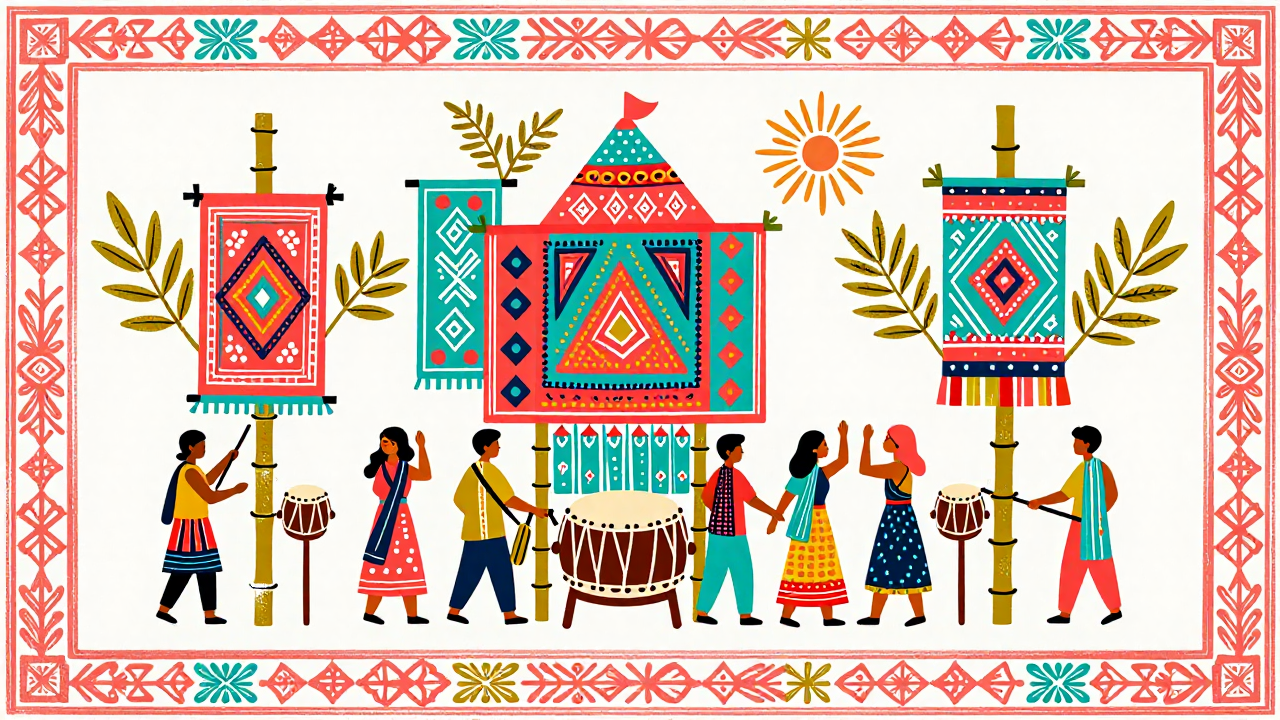
Over time, Behdienkhlam became both a religious observance and a major cultural gathering. Elaborately decorated “rots,” or symbolic wooden structures, are carried through the town, and groups associated with different localities participate in the processions. A notable part of the celebration is the immersion of these structures in a designated water body, an act understood as helping to cast away misfortune. Traditional music, drums, dances, and the lively form of football known as datlawakor add a strongly communal and competitive dimension to the festival.
The continuing observance of Behdienkhlam on July 10 demonstrates the resilience of Pnar cultural identity in Meghalaya. Although contemporary celebrations may include larger public participation and organized cultural programs, the festival retains its central themes: safeguarding the community, honoring inherited religious traditions, seeking agricultural well-being, and renewing social bonds. For the Pnar people, it is not merely a colorful annual event but a living expression of history, faith, environmental dependence, and collective responsibility.