Mărțișor
Romania, Moldova, Bulgaria, Greece, Albania
About
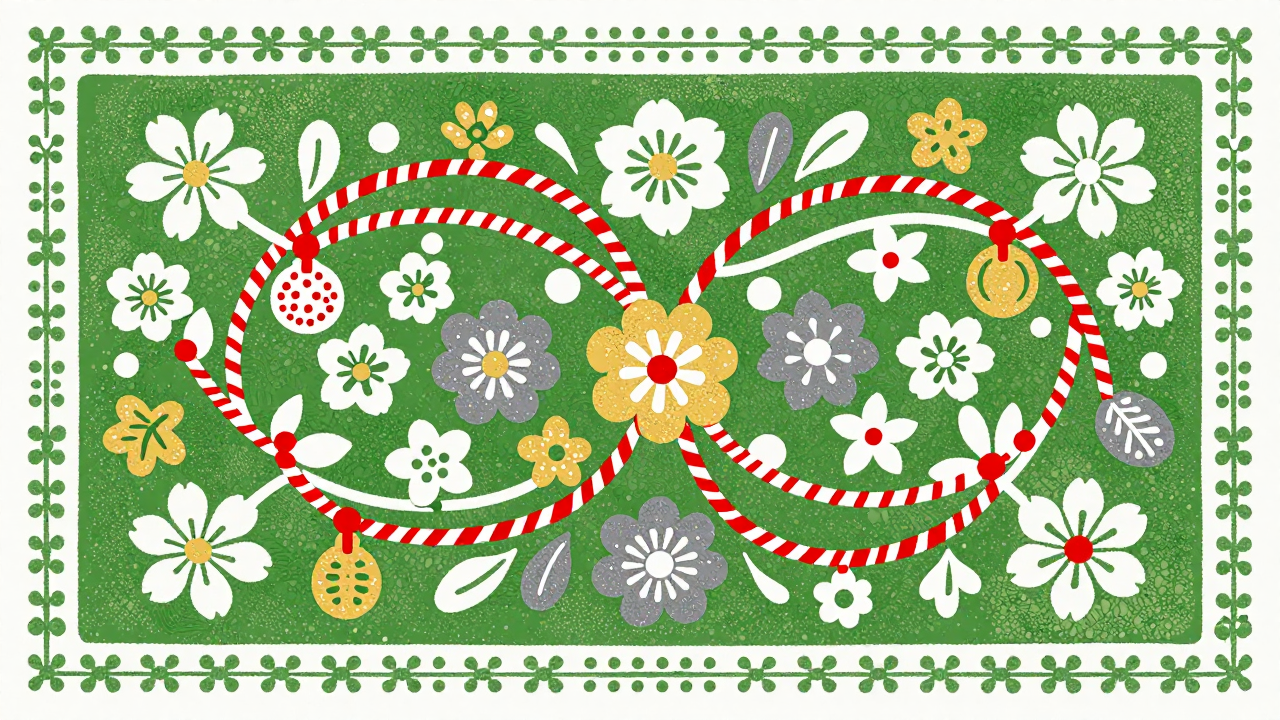
Mărțișor, celebrated on March 1, is a delightful tradition that heralds the arrival of spring in Romania and Moldova. This charming observance is marked by the exchange of red and white cords, often adorned with small decorative charms. The colors symbolize the duality of life—red representing vitality and passion, while white signifies purity and hope. As people tie these strings around their wrists or hang them on trees, they share wishes for health, happiness, and prosperity, embracing the renewal that spring brings.
The roots of Mărțișor trace back to ancient customs that celebrate the awakening of nature, and it is often seen as a way to honor the changing seasons. Families and friends come together to participate in this heartwarming tradition, reflecting the deep connections and community spirit that it fosters. As March 1 approaches, anticipation builds for the joyful exchanges and the blossoming of new beginnings, making Mărțișor a truly cherished occasion that bridges generations and cultures.
History
Mărțișor is a traditional Romanian observance celebrated on March 1, marking the arrival of spring and the rejuvenation of nature. Its origins can be traced back to ancient pre-Christian times, where it is believed to have roots in Dacian customs. The Dacians, who inhabited the region that is now Romania, celebrated the beginning of spring with rituals that honored fertility and the renewal of life. The symbolic colors of red and white, often represented in the Mărțișor talismans, are thought to signify the duality of life—red representing vitality and white representing purity.
As the centuries progressed, Mărțișor evolved and assimilated various cultural influences due to the region's interactions with different peoples including the Romans and later, the Ottoman Empire. By the 14th century, the celebration had become more formalized, with the Mărțișor becoming a small decorative talisman traditionally made of red and white threads. This amulet was gifted to loved ones as a symbol of health, prosperity, and happiness for the upcoming year. The tradition of wearing the Mărțișor throughout March is believed to bring good luck, and it is often worn until the wearer sees the first blooming tree, at which point it is tied to the branch as an offering for a fruitful year.
Culturally, Mărțișor holds significant importance in Romania and Moldova, where it is celebrated with various customs and festivities. The observance has been recognized by UNESCO as part of the Intangible Cultural Heritage of Humanity, highlighting its importance in maintaining cultural identity and intergenerational connections. On March 1, people commonly exchange Mărțișoare, small tokens that often come in the form of intricate designs, reflecting a deep appreciation for craftsmanship and artistic expression. The day is not only a celebration of spring but also a time for family gatherings and community events, reinforcing social bonds.
In recent years, Mărțișor has seen a resurgence in popularity among younger generations, who have embraced both traditional and modern interpretations of the holiday. While the classic red and white threads remain prevalent, contemporary designs incorporate various motifs and materials, reflecting a blend of old customs and new creativity. The observance serves as a reminder of the importance of nature's cycles and the enduring human connection to seasonal changes, making March 1 a day of hope and renewal for many in Romania and beyond.