Earth at Perihelion
About
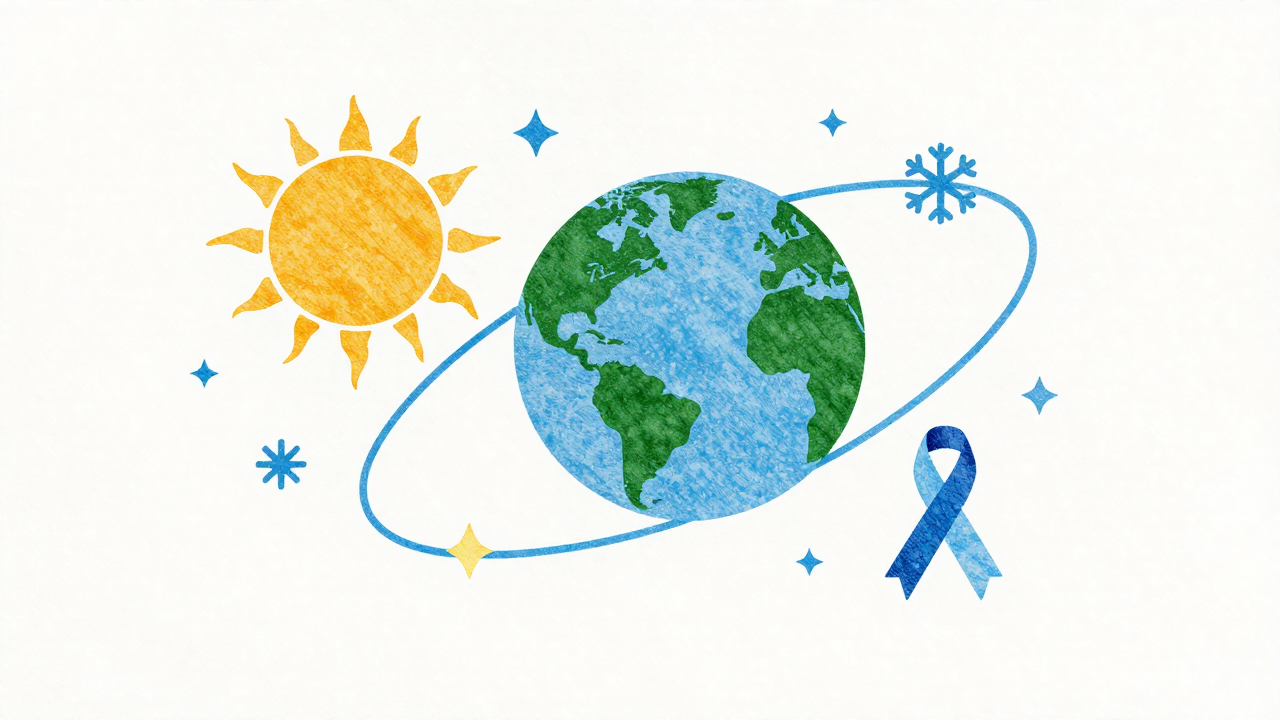
Earth at Perihelion, observed on January 2, is a fascinating astronomical event that marks the point in Earth's orbit when it is closest to the Sun. This moment, which occurs once a year, offers a unique opportunity to reflect on our planet's relationship with the solar system and the remarkable celestial mechanics that govern our existence. While we often think of summer as the warmest season, it is during this time—when we are closest to our star—that we experience winter in the Northern Hemisphere. This paradox invites us to appreciate the intricate dance of the Earth as it orbits the Sun.
As we celebrate Earth at Perihelion, we are reminded of the beauty and complexity of our planet. This day encourages us to look up at the sky and marvel at the wonders of the universe, fostering a sense of curiosity and connection to the natural world. Whether you’re an astronomy enthusiast or simply enjoy stargazing, January 2 is a perfect opportunity to engage with the cosmos, perhaps by visiting a local observatory, participating in a stargazing event, or simply enjoying the clear winter skies. Embrace this day as a chance to deepen your appreciation for our home in the vast universe!
History
Earth at Perihelion is observed on January 2 each year, marking the moment when our planet is closest to the Sun in its elliptical orbit. This astronomical event occurs due to the slightly irregular path the Earth takes around the Sun, which is influenced by gravitational interactions with other celestial bodies. Although the distance between the Earth and the Sun changes throughout the year, the perihelion typically occurs in early January, around the 2nd.
The origins of recognizing Earth at Perihelion can be traced back to the developments in astronomy during the Renaissance, when scholars like Johannes Kepler laid the groundwork for our understanding of planetary motion. Kepler's laws of planetary motion, formulated in the early 17th century, provided the scientific basis for comprehending how planets, including Earth, travel around the Sun. However, the specific observance of perihelion as a noteworthy event in the calendar has gained more attention only in recent centuries as public interest in astronomy and environmental awareness has increased.
Over time, Earth at Perihelion has evolved from a purely scientific observation to a cultural touchstone, symbolizing humanity's connection to the cosmos. While it may not be celebrated in the same manner as traditional holidays, it has become an opportunity for educational initiatives, encouraging people to learn about the solar system and the significance of celestial events. Enthusiasts of astronomy often use this day to promote awareness of climate issues, emphasizing the importance of understanding our planet's position in relation to the Sun and its implications for life on Earth.
The cultural significance of Earth at Perihelion lies in its reminder of the dynamic relationship between the Earth and the Sun, and how this relationship affects seasonal changes, climate, and ecosystems. As we observe this event on January 2, it serves as a moment for reflection on our planet's place in the universe and the importance of protecting the environment. In a world facing climate change and ecological challenges, the observance of Earth at Perihelion inspires a sense of wonder and responsibility towards our home planet.