Ram Navami
India, Nepal, Bangladesh, Mauritius, Fiji, Trinidad and Tobago, Guyana
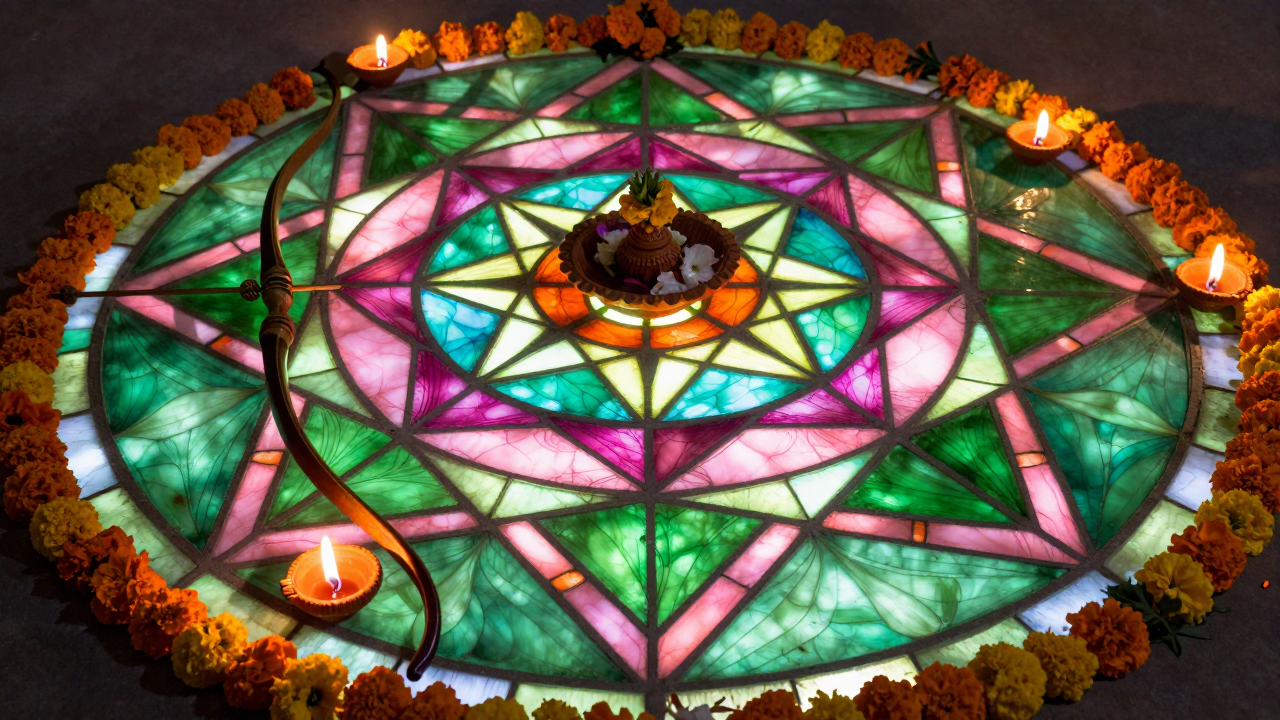
About
Ram Navami, celebrated on April 15, is a vibrant and joyous festival that marks the birth of Lord Rama, one of the most revered deities in Hinduism. This day is a significant occasion for millions around the world, symbolizing the triumph of good over evil. According to the epic Ramayana, Lord Rama is considered the seventh incarnation of Lord Vishnu, and his life and teachings continue to inspire countless devotees, emphasizing virtues such as righteousness, honor, and devotion.
The festivities of Ram Navami are filled with devotion and reverence, often beginning with early morning rituals and prayers. Temples are adorned with flowers, and devotees gather to sing hymns and chant mantras dedicated to Lord Rama. Many people also engage in reading the Ramayana, sharing stories of Rama's life, and participating in processions that celebrate his legacy. The atmosphere is one of joy and community, as families and friends come together to honor this auspicious day, making it a time of reflection and celebration of the values that Lord Rama embodies.
History
Ram Navami is a significant Hindu festival that celebrates the birth of Lord Rama, one of the most revered deities in Hinduism. Observed annually on April 15, this festival is deeply rooted in the ancient epic, the Ramayana, which narrates the life and adventures of Rama, the seventh avatar of the god Vishnu. The origins of Ram Navami can be traced back to the Treta Yuga, as described in Hindu scriptures, where Lord Rama was born to King Dasharatha and Queen Kaushalya in Ayodhya. This event is believed to have occurred on the ninth day of Chaitra month according to the Hindu lunar calendar, which corresponds to April 15 in the Gregorian calendar for many years.
Over the centuries, Ram Navami has evolved from a primarily regional celebration in Ayodhya to a widely observed festival across India and among the Hindu diaspora worldwide. Initially marked by local gatherings and rituals, the celebration gained momentum in the 19th century when various socio-religious reform movements began to emphasize the importance of Rama as an ideal figure of dharma (righteousness) and virtue. Temples dedicated to Rama started organizing grand celebrations, including processions, recitations of the Ramayana, and various cultural performances that depicted episodes from Rama's life. This evolution reflected a broader cultural revival and interest in Hindu traditions, contributing to the festival's growth in popularity and significance.
Culturally, Ram Navami holds immense importance as it symbolizes the triumph of good over evil, as represented by Lord Rama's victory over the demon king Ravana. The festival serves as a reminder of the values of duty, honor, and moral conduct, which are central to Rama’s character. It is marked by various rituals, including the chanting of devotional hymns, temple visits, and community feasts. In many regions, devotees engage in fasting and participate in elaborate processions that often feature images of Lord Rama, his wife Sita, and his brother Lakshmana, highlighting the familial bonds and virtues depicted in the Ramayana.
In contemporary times, Ram Navami has also become a platform for social and cultural gatherings that reinforce community ties and promote religious unity. The festival is not only a time for spiritual reflection but also an occasion for cultural expression, as various forms of art, music, and dance are showcased in honor of Lord Rama. As it continues to be celebrated on April 15 each year, Ram Navami remains a vibrant testament to the enduring legacy of Lord Rama and the values he embodies within Hindu culture.