Kupala Night
Belarus, Poland, Russia, Ukraine, Lithuania, Latvia
About
Kupala Night, observed on July 6, is a lively Slavic midsummer celebration honoring nature, fertility, love, and the life-giving power of water and fire. Rooted in ancient seasonal traditions, the observance welcomes the height of summer with music, dancing, flowers, and joyful gatherings beneath the open sky.
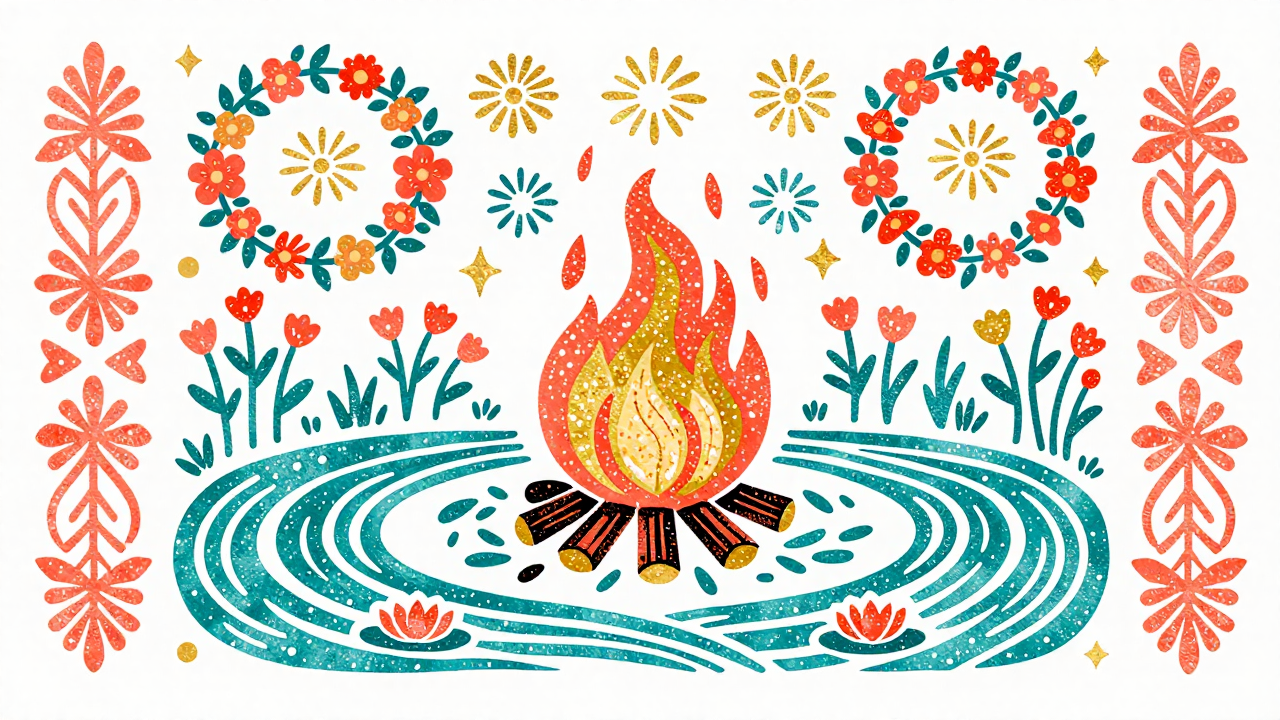
Many celebrations feature bonfires, wreaths woven from wildflowers, and symbolic rituals connected with rivers and lakes. People may float flower crowns on the water, leap over flames, or gather herbs believed to carry special meaning at this time of year. Today, Kupala Night remains a warm celebration of community, romance, renewal, and the beauty of the natural world.
History
Kupala Night, observed on **July 6**, is a traditional midsummer celebration associated especially with Slavic cultures, including Ukrainians, Belarusians, Poles, and Russians. Its roots lie in pre-Christian seasonal customs connected with the sun, water, fire, fertility, and the natural world. The name is commonly linked to the idea of bathing or ritual purification, while later Christian traditions connected the celebration with the feast of Saint John the Baptist. As a result, the observance developed both pagan seasonal features and Christian interpretations.
Historically, the celebration marked a powerful turning point in the agricultural year. Communities gathered near rivers, lakes, and forests, where young people performed rituals intended to encourage health, prosperity, fertility, and protection from misfortune. Fire was central: celebrants lit bonfires, danced around them, and sometimes jumped over the flames. These actions were understood as tests of courage and as symbolic acts of purification. Water also played an important role, with bathing, swimming, and the floating of flower wreaths becoming prominent customs.
Over time, Kupala Night changed as Christian authorities and later governments attempted to regulate or reinterpret older folk practices. Some rituals were discouraged, while others survived by being incorporated into local celebrations, songs, dances, and community gatherings. In many regions, the observance became especially associated with young people, courtship, and the search for a legendary fern flower said to bloom only during the midsummer night. Although the fern-flower story is folkloric rather than botanical fact, it expresses the night’s association with mystery, love, and the discovery of hidden fortune.
Today, Kupala Night on **July 6** remains an important cultural observance and a symbol of Slavic heritage. Modern celebrations may include bonfires, traditional music, wreath-making, folk costumes, dancing, and performances inspired by village customs. While few participants necessarily interpret the rituals literally, the observance continues to preserve ideas about renewal, community, the changing seasons, and humanity’s relationship with nature. Its endurance reflects the ability of folk traditions to adapt while retaining recognizable symbols and meanings.