EDSA Revolution Holiday
Philippines
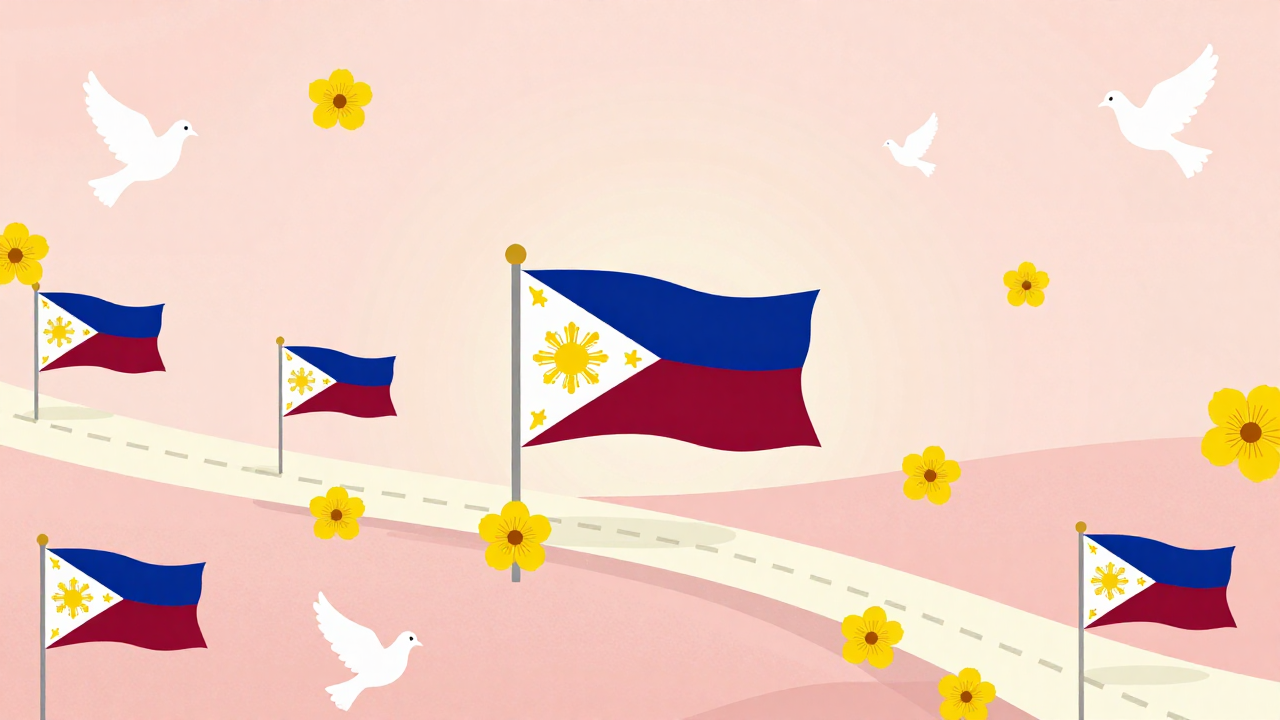
About
EDSA Revolution Holiday, observed on February 25, is a significant day in the Philippines that commemorates the peaceful uprising known as the EDSA People Power Revolution. This remarkable event took place in 1986 and marked a pivotal moment in the nation’s history, as millions of Filipinos gathered along Epifanio de los Santos Avenue (EDSA) to peacefully protest against the authoritarian regime of Ferdinand Marcos. The holiday serves as a reminder of the power of unity and non-violent resistance, showcasing how collective action can lead to monumental change.
On this day, communities across the Philippines come together to honor the spirit of democracy and freedom. Various activities, including parades, memorials, and educational programs, are organized to reflect on the importance of the EDSA Revolution. Families and friends gather to share stories of bravery and hope, ensuring that the values of courage and solidarity continue to resonate with future generations. EDSA Revolution Holiday is not just a day of remembrance; it is an invitation for all Filipinos to celebrate their shared history and to remain vigilant in the pursuit of justice and equality.
History
The EDSA Revolution Holiday, observed annually on February 25, commemorates the historic People Power Revolution that took place in the Philippines in 1986. This peaceful uprising was pivotal in overthrowing the dictatorship of Ferdinand Marcos, who had ruled the country for over two decades. The origins of the observance trace back to the mass mobilizations that began on February 22, 1986, when the military defected to the opposition, culminating in millions of Filipinos gathering along Epifanio de los Santos Avenue (EDSA) to call for democratic reforms and the restoration of civil liberties.
As the revolution unfolded, it was marked by the extraordinary unity of the Filipino people, who stood together regardless of their political affiliations or social classes. The culmination of this movement was the departure of Marcos and his family from the Malacañang Palace on February 25, 1986, which was celebrated as a triumph of democracy over tyranny. In 2001, the Philippine government declared February 25 as a national holiday to honor the spirit and significance of this event, ensuring that its legacy would be preserved for future generations.
Over the years, the EDSA Revolution Holiday has evolved in its observance, shifting from a purely political commemoration to a broader celebration of democracy and freedom. Schools, organizations, and communities engage in various activities, including parades, civic programs, and educational discussions, aimed at instilling the values of democracy and human rights among younger generations. This evolution reflects not only a remembrance of the past but also a reminder of the continuing relevance of the ideals fought for during the revolution.
Culturally, the EDSA Revolution Holiday holds significant importance in the collective memory of the Filipino people. It serves as a powerful symbol of nonviolent resistance and the ability of ordinary citizens to effect change. The vivid imagery of the peaceful protests, often featuring participants holding rosaries and flowers, has become ingrained in the national psyche, exemplifying the strength of unity in the pursuit of justice. As such, February 25 stands not just as a day of remembrance but as a call to action for the protection of democracy and the ongoing fight against oppression in all forms.