Djibouti Independence Day
Djibouti
About
Djibouti Independence Day, observed on June 27, celebrates the country’s independence from France in 1977. The occasion honors Djibouti’s journey to sovereignty and the national pride shared by its people, while reflecting on the history, resilience, and aspirations that continue to shape the nation.
Across Djibouti, the day is marked with patriotic spirit, public celebrations, music, cultural activities, and displays of the national flag. It is also a time for families and communities to come together, celebrate Djiboutian identity, and look ahead to the country’s future with hope and unity.
History
Djibouti Independence Day commemorates the country’s independence from France on **June 27, 1977**. The event ended decades of French administration in the territory, which had been known as French Somaliland and later as the French Territory of the Afars and Issas. The path to independence followed growing political demands from Djibouti’s communities, particularly amid debates over self-government, representation, and the territory’s future relationship with France and its neighboring countries.
A referendum held in 1977 supported independence, and Djibouti became a sovereign republic on June 27 of that year. Hassan Gouled Aptidon became the country’s first president. Independence was especially significant because Djibouti occupies a strategically important position at the entrance to the Red Sea, near the Gulf of Aden. Its sovereignty established Djibouti as an independent state in a region shaped by colonial competition, maritime trade, and the political interests of surrounding Ethiopia and Somalia.
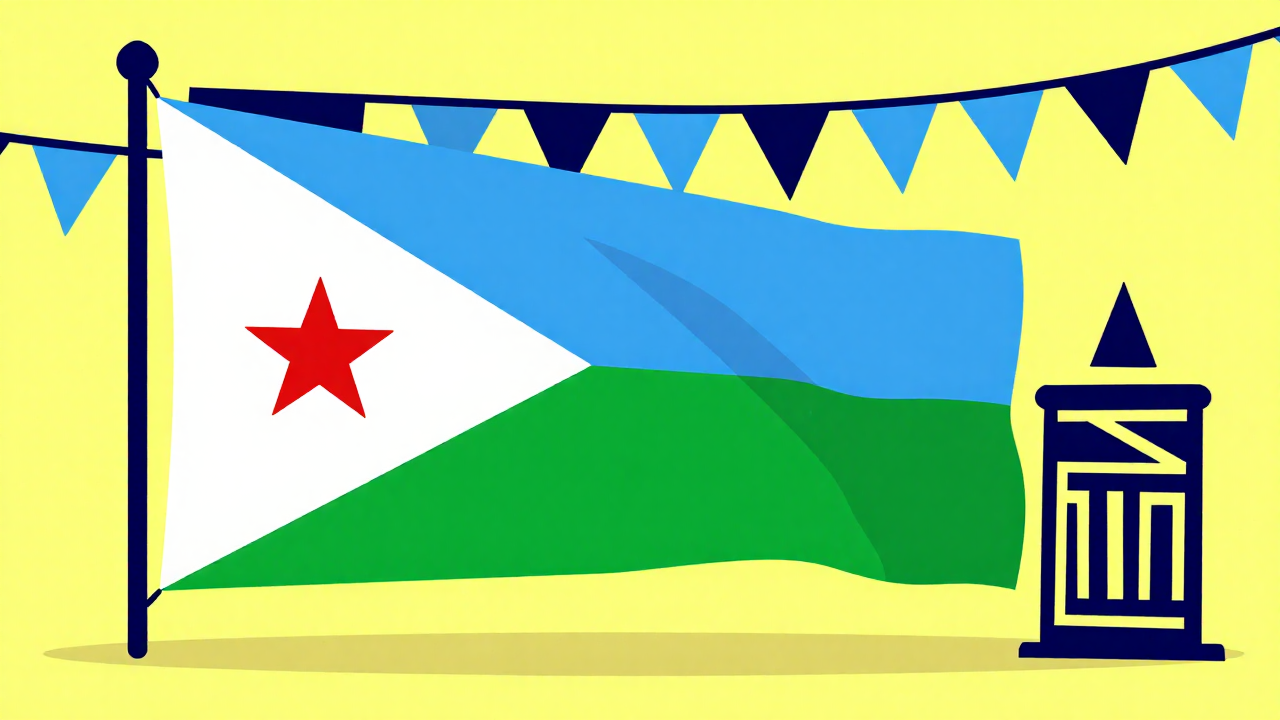
Over time, June 27 has developed from a formal commemoration of decolonization into a major national celebration. Official ceremonies commonly include speeches, parades, flag displays, musical performances, and cultural presentations. Public observances emphasize the achievements of the republic while honoring the people and political movements associated with the struggle for self-determination. The national flag—featuring blue and green fields, a white triangle, and a red star—also has a prominent place in the day’s events.
The holiday carries both historical and civic meaning. It recalls the end of foreign rule and affirms Djibouti’s identity as an independent nation whose population includes diverse cultural and linguistic traditions, including Afar and Somali communities. Celebrated annually on **June 27**, Djibouti Independence Day provides an occasion to reflect on national unity, sovereignty, and the country’s continuing development since independence.